
Photo © Karine Dinev
 
 
U.S. Sanctuaries

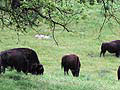
The Foundation operates two animal sanctuaries in Central California near Cayucos and Paso Robles; refuges for domestic animals, as well as a wild forest canopy and a multitude of native species. The domestic sanctuaries provide a safe haven for a significant number of rescued equines and bovines, as well as some pigs, dogs, cats, a goat, and a multitude of wild migratory birds. The staff focuses on the care of the many animals, and of habitat management and restoration.

It was the vision long ago of the founder, Sue Stiles, that these animals be loved and that their independence and free spirits honored. In that respect, the domestic sanctuaries are also symbolic of the whole “sanctuary movement” worldwide. Millions of other animals will never enjoy a safe refuge from the turmoil and hazards of this world and their exploitation by humankind.  Cows, for example, rarely live beyond 5 years of age in industrial captivity, whereas their natural lifespan can easily exceed 20 years. The underlying philosophy guiding DSF’s efforts is the restoration of healthy lives for the animals in our charge, but also that of the vulnerable supporting ecosystems. The reality of finite carrying capacity at the DSF preserves has mandated a Foundation policy of maintaining a sustainable population of various animal groups, which precludes taking on additional residents.

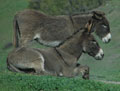
The DSF wild refuge, home to a substantial population of burros, is also an oasis for native California oak forests and the suite of flora and fauna inherent to this type of Central California biome. California as a whole has twenty known oak species,  Genus Quercus, two of which are found in abundance within the refuge regions.

The DSF Sanctuary teams comprise over 30 individuals. Among them are managers, caregivers, and maintenance staff. Collectively, they provide a thorough knowledge base of experience, dedication and compassion.

In all, there are approximately 1,000 acres of California refuge lands owned by the Foundation. Neither refuges is open to the public. They provide "sanctuary" solely for the benefit, solace, peace and quiet of the resident species.

The Foundation's sanctuaries are in two of the world's biological "hotspots" (Central California and New Zealand), regions of the planet where there has been historic environmental degradation the result of which is that a large number of endemic species are at risk. The Foundation focuses on both habitat restoration (along with the conservation of the countless native taxa that reside therein - forest canopy, understory, flora, fauna, insects), as well as animal protection as it applies to actual individuals at the California sanctuaries, from burros to cows, horses, pigs, dogs and cats. At the DSF Ecological Preserve in New Zealand, that protective impetus also encompasses every individual member of the rare species that are sheltered, monitored and given the habitat they need in order to breed and be free from threat.